Diesel Parity is Within Reach
With the right route, subsidy, toll, and hydrogen price conditions, fuel cell trucks can make economic sense today.

What Drives the Business Case
The economic viability of hydrogen trucks is driven by a combination of policy support, operational savings, and long-term cost stability.

Subsidies
Reduce upfront investment and improve payback windows.

Toll Advantages
Improve cost per kilometre through reduced or waived road tolls.

Fuel Cost Visibility
Support planning through long-term hydrogen supply and pricing models.

CO2 Cost Avoidance
Reduce exposure to rising diesel and emissions-related costs.
Germany Business Case Example
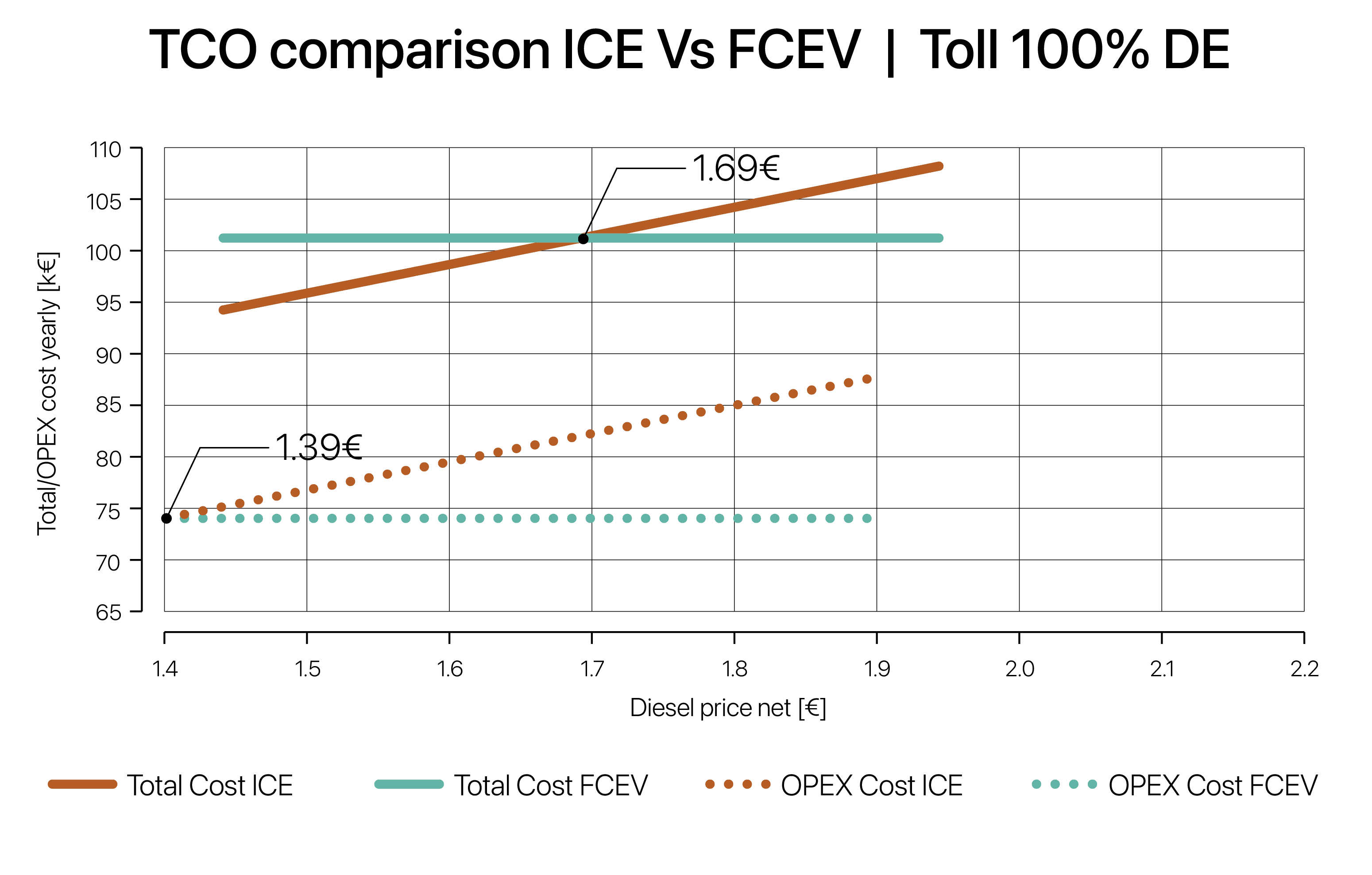
A route-based TCO analysis shows how fuel cell trucks can approach diesel parity when vehicle subsidies, toll advantages, hydrogen pricing, and CO₂-related costs are considered together.
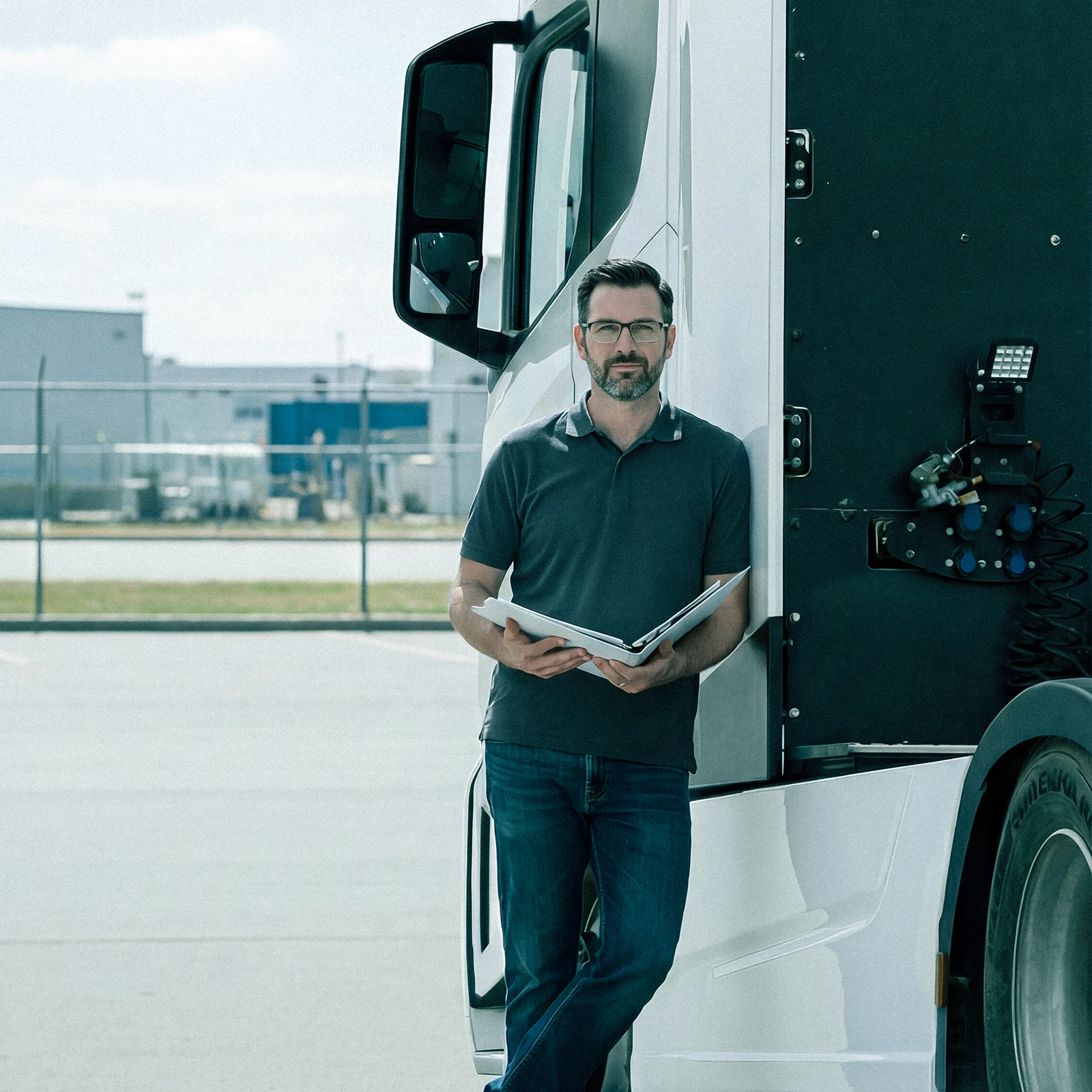
Where Hydrogen Makes Business Sense
In the right operating conditions, fuel cell trucks can support both cost competitiveness and strategic fleet value.
• Access to green logistics contracts
• Access to zero-emission zones
• Support for ESG and Scope 3 targets
• Future-proof operations
Explore your savings potential based on your fleet profile.
Financial Service
Every fleet has different financial and operational needs. RYGG offers flexible models to match your strategy—whether you prioritize ownership, cash flow, or full-service simplicity.

Ownership
Direct purchase with full asset control.
• Full asset ownership
• Maximum long-term ROI
• Full flexibility in operations

Financial Lease
Structured financing with predictable payments.
• Lower upfront cost
• Fixed payment plan
• End-of-term option

Operating Lease
Asset-light access with flexible contracts.
• Lower asset exposure
• Predictable costs
• Flexible terms

Pay-per-use
Usage-based access for trials and ramp-up.
• Pay by usage
• Lower commitment
• Easy pilot entry
Hydrogen Availability and Price Visibility
Hydrogen supply is a critical part of fleet operation. RYGG works with refuelling infrastructure partners to support route planning, station access, and deployment readiness in selected markets.
Long-term supply and pricing models can help improve cost transparency and reduce exposure to market fluctuations. Where available, RYGG can support bundled fuel pricing and route planning aligned with the hydrogen station network.